Best Korean Food to Try: 25 Must-Eat Dishes in Korea
Discover the 25 best Korean foods you must try — from samgyeopsal and bibimbap to tteokbokki and patbingsu. Your complete guide to eating in Korea.
Best Korean Food to Try: 25 Must-Eat Dishes in Korea
Korean cuisine is one of the world's most exciting food cultures — bold fermented flavors, sizzling tabletop grills, colorful street snacks, and soups so good they feel medicinal. Whether you're visiting Korea for the first time or deepening your food knowledge, this guide covers the 25 best Korean foods you absolutely must eat, from iconic classics to regional specialties only locals know.
Why Korean Food Is Worth the Hype
Korean food isn't just delicious — it's a full experience. Meals are communal, tables arrive covered in free side dishes (banchan), and many dishes are cooked right at your table. Four foundational ingredients anchor the entire cuisine: gochugaru (red chili flakes), doenjang (fermented soybean paste), ganjang (soy sauce), and sesame oil. Understand these, and Korea's food culture starts to make sense.
The 25 Best Korean Foods to Try
1. Korean BBQ — Samgyeopsal & Galbi
The undisputed king of Korean dining. Thick pork belly (samgyeopsal, 삼겹살) or marinated beef short ribs (galbi, 갈비) grilled at your table over charcoal. Wrap the meat in lettuce with garlic, green onion, and fermented soybean paste. The ritual of grilling together makes every meal feel like a celebration.
Where to try: Mapo-gu in Seoul is packed with legendary samgyeopsal restaurants.
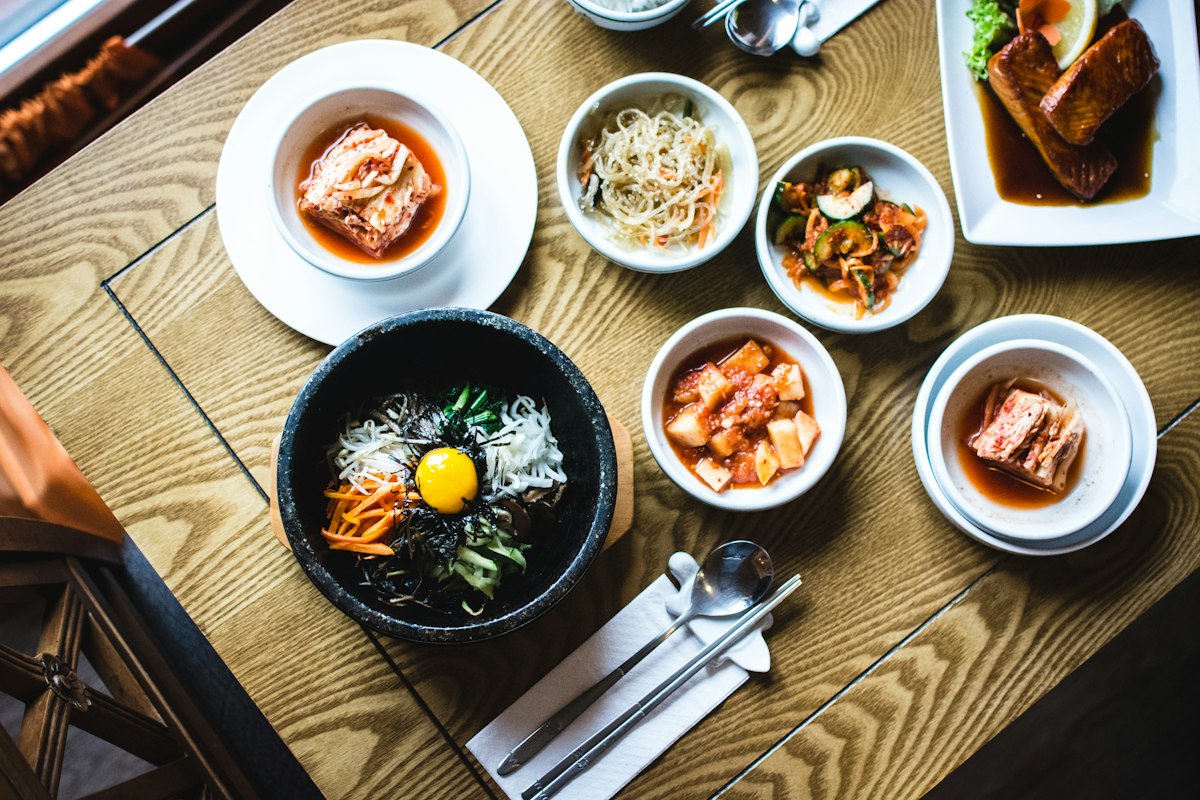
2. Bibimbap (비빔밥)
Rice topped with seasoned vegetables, a fried egg, gochujang (red pepper paste), and sometimes bulgogi. "Bibim" means to mix — stir everything together before eating. Jeonju, a city in southwest Korea, makes the country's best bibimbap and is worth a day trip.
Order: Dolsot bibimbap (돌솥비빔밥) — served in a sizzling stone pot that crisps the rice at the bottom.
3. Tteokbokki (떡볶이)
Chewy rice cakes in a deeply spicy, slightly sweet gochujang sauce. The ultimate Korean street comfort food — found at every pojangmacha (street tent) and market stall. Modern restaurants offer rose tteokbokki (creamy, less spicy) and mozzarella-topped versions if you need to dial back the heat.
4. Bulgogi (불고기)
Thinly sliced marinated beef — Korea's most internationally recognized dish. The marinade of soy sauce, sesame oil, garlic, Asian pear, and sugar creates a sweet-savory flavor unlike anything else. Excellent over rice, wrapped in lettuce, or in a stone pot.
5. Japchae (잡채)
Stir-fried sweet potato glass noodles with colorful sautéed vegetables and beef. Slightly sweet, nutty from sesame oil, and one of the most elegant dishes in Korean cuisine. A holiday staple and a reliable crowd-pleaser.
6. Kimchi (김치)
Korea's most iconic food — fermented napa cabbage with gochugaru, garlic, ginger, and salted seafood. Present at every Korean table as banchan, but the best way to experience it is fresh from the kimchi pot at a family-run restaurant. Over 200 types exist: try kkakdugi (radish kimchi) and oi sobagi (cucumber kimchi) beyond the classic.
7. Sundubu-jjigae (순두부찌개)
Silky extra-soft tofu stew in a fiery red broth, served bubbling in a stone pot. Crack a raw egg in when it arrives, stir it into the broth, and eat with rice. One of the most warming and protein-rich meals in Korea.
Seoul Traditional Korean Food Tour
From From $48/person
Evening small-group food tour through Gwangjang Market and Insadong — 8 Korean dishes with an English-speaking foodie guide.
Book Food Tour →8. Korean Instant Noodles (라면)
Korean instant noodles are a cultural phenomenon, not just convenience food. Shin Ramyeon, Buldak fire chicken, and Jjapaghetti are beloved across generations. Eating ramyeon at a convenience store at 2am — cooked in the cup with a fried egg and kimchi — is a quintessential Korean experience.
9. Samgyetang (삼계탕)
Whole baby chicken stuffed with glutinous rice, ginseng, garlic, and jujubes, simmered into a milky white broth. Koreans eat this on the hottest summer days under the philosophy of "fighting heat with heat" (이열치열). Rich, nourishing, and unlike anything in Western cuisine.
10. Gamjatang (감자탕)
Pork spine soup with soft potatoes and perilla leaves in a deep, spicy broth — one of Korea's most underrated dishes. A late-night staple popular after drinking, available at many 24-hour restaurants throughout Seoul.
11. Jajangmyeon (자장면)
Noodles topped with black bean paste sauce mixed with pork and vegetables. Chinese-Korean fusion invented by Chinese immigrants and now so embedded in Korean culture that April 14th is unofficially "Black Day" — when singles eat it alone in collective solidarity.
12. Kimbap (김밥)
Seaweed-wrapped rice rolls filled with vegetables, egg, and ham or tuna. Often called "Korean sushi" but it's its own distinct food — no raw fish, no wasabi. A full roll costs under ₩4,000 at a Kimbap Cheongguk chain. Perfect for picnics at Han River parks.
13. Haemul Pajeon (해물파전)
Crispy seafood and green onion pancake. The outside shatters, the inside is chewy, the filling bursts with fresh shrimp, squid, and oysters. Best eaten at a makgeolli bar (막걸리) — the pairing of savory pancake with fizzy rice wine is a Korean institution, especially on rainy days.
14. Doenjang-jjigae (된장찌개)
Fermented soybean paste soup with tofu, zucchini, mushrooms, and clams. Korea's version of miso soup but earthier, richer, and much thicker. Every Korean family has its own recipe — finding a great version at a family-run restaurant is one of the quiet joys of travel.
15. Bossam (보쌈)
Boiled pork belly slices served with fresh cabbage leaves, radish kimchi (kkakdugi), and fermented shrimp paste. Lighter and more delicate than BBQ pork belly — a Seoul classic found in the Samcheong-dong neighborhood at traditional hanok restaurants.
16. Dakgalbi (닭갈비)
Spicy stir-fried chicken with rice cakes, sweet potato, and cabbage in gochujang sauce, cooked on a giant iron pan at your table. Chuncheon (1 hour east of Seoul) is the spiritual home of dakgalbi and worth a day trip specifically for this dish.
17. Naengmyeon (냉면)
Ice-cold buckwheat noodles in a tangy beef broth (mul naengmyeon) or spicy gochujang sauce (bibim naengmyeon). A Korean summer institution — the broth is sometimes served partially frozen. Stir until the ice melts, then eat. Pyongyang-style naengmyeon is considered the authentic classic.
Gwangjang Market Korean Street Food Tour
From From $35/person
Guided tour of Seoul's oldest covered market — taste bindaetteok, mayak gimbap, sundae, and more with a local food expert.
Join the Tour →18. Sundae (순대)
Korean blood sausage — pork intestines stuffed with glass noodles, pork blood, and vegetables. A beloved street food with a strong, earthy flavor. Served with salt and fermented shrimp paste. A classic at Gwangjang Market in Jongno.
19. Bindaetteok (빈대떡)
Mung bean pancakes — thick, crispy, and loaded with kimchi and pork. One of Korea's oldest street foods, fried fresh on massive griddles at Gwangjang Market. The crunch-to-chew contrast is exceptional.
20. Korean Fried Chicken (치킨)
Korea perfected fried chicken. Double-frying creates a paper-thin, shatteringly crispy crust that stays crispy for hours. Choose between yangnyeom (sweet, spicy, sticky glaze) or original (pure crunch). Always eat with beer (치맥, chimaek) and pickled radish.
21. Ganjang Gejang (간장게장)
Raw blue crabs marinated in soy sauce — nicknamed "rice thief" (밥도둑) because the briney, savory, sweet marinade makes you eat bowl after bowl of rice. An acquired taste and one of Korea's most prized delicacies. Try it at a banchan shop in Seoul's traditional markets.
22. Kongguksu (콩국수)
Cold noodles in a chilled, creamy soybean broth — one of Korea's most refreshing summer dishes. Mild, nutty, and surprisingly filling. A staple at traditional Korean restaurants during July and August.
23. Jokbal (족발)
Braised pig's trotters simmered in soy sauce, ginger, and spices until fall-apart tender. Rich, collagen-heavy, and deeply satisfying. Served with shrimp paste and fresh garlic. Euljiro in central Seoul is famous for its jokbal alley.
24. Mandu (만두)
Korean dumplings — steamed, pan-fried, or in soup. Kimchi mandu and pork mandu are the classics. Manduguk (mandu soup) is a must on Seollal (Korean New Year). Find them freshly made at any traditional market.
25. Patbingsu (팥빙수)
Shaved ice dessert topped with sweet red bean paste, rice cakes, condensed milk, and fruit — Korea's most beloved summer treat. Modern versions stack mango, matcha, or strawberry on clouds of milk-shaved ice. Available everywhere from convenience stores to high-end cafés from May through September.
Best Places to Eat in Seoul
- Gwangjang Market — Street food classics: bindaetteok, mayak gimbap, sundae
- Mangwon Market — Local neighborhood market, far less touristy than Gwangjang
- Noryangjin Fish Market — Buy fresh seafood and have it prepared upstairs
- Mapo / Hongdae — Best samgyeopsal restaurants and late-night chimaek spots
- Insadong — Traditional Korean teahouses and temple food
- Jongno — Doenjang-jjigae and bossam restaurants in historic surroundings
Practical Tips for Eating in Korea
- Banchan is always free and refillable — asking for more is completely normal and expected
- Water is self-serve — look for the dispenser near the entrance
- No tipping — tipping is not Korean custom and can cause confusion
- Menus with photos make ordering easy even without Korean language skills
- Convenience stores (CU, GS25, 7-Eleven) serve surprisingly good and cheap food — don't overlook them
For more on where to eat, check our Korean street food guide and the best Korean BBQ spots in Seoul.
Conclusion
Korean food is one of the world's great culinary traditions — and the best place to experience it is Korea itself. From the theater of Korean BBQ to the quiet comfort of a perfect doenjang-jjigae, every dish tells you something about Korean culture, history, and hospitality. Use this guide as your eating blueprint and let the flavors lead the way.
Ready to start planning? Our Seoul travel guide covers everything else you need to know before your trip.
Frequently Asked Questions
What is the most popular Korean food?
Is Korean food very spicy?
What should I eat first in Korea?
Is Korean food healthy?
Where is the best place to try Korean street food?
Was this guide helpful?
No ratings yet — be the first!
Related Guides
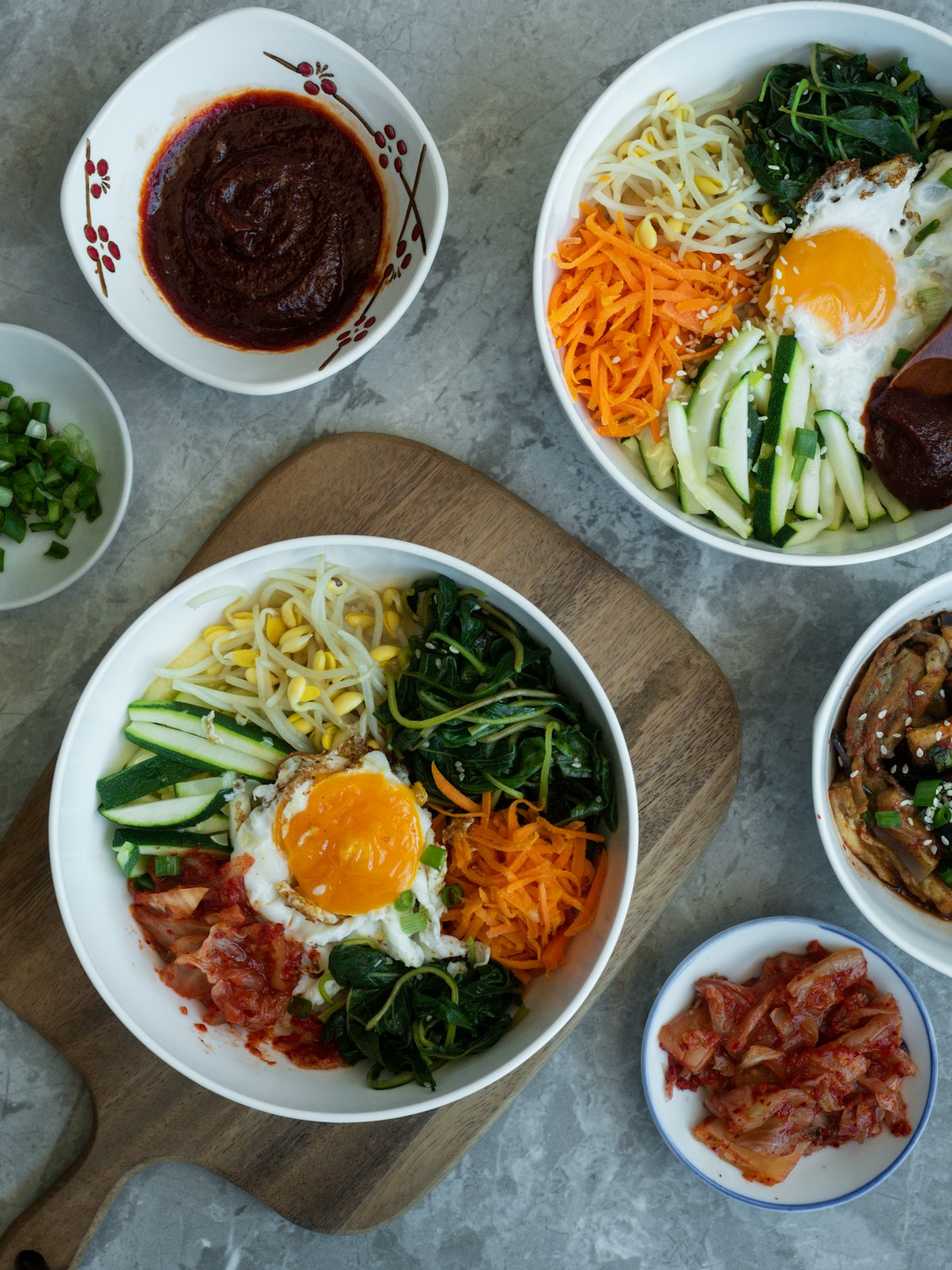
Best Korean BBQ in Seoul: 10 Local Spots You Can't Miss
Discover the best Korean BBQ restaurants in Seoul, from budget-friendly spots to premium choices. Insider tips from locals on where to eat KBBQ in 2026.
Korean Street Food Guide: 20 Must-Try Foods in Seoul
Your complete guide to Korean street food in Seoul. What to eat, where to find it, how much it costs, and which stalls are actually worth queuing for.
Best Cafes in Seoul: Instagram-Worthy & Hidden Gems (2026)
Seoul is a cafe paradise. Discover the best cafes in Seongsu, Hongdae, and Insadong — specialty coffee, unique themed spaces, and hidden gems worth the trip.

7-Day Seoul Itinerary for First-Time Visitors (2026 Guide)
The perfect 7-day Seoul itinerary for first-timers — palaces, street food, K-pop, Han River and day trips. Complete day-by-day plan with insider tips and maps.